

How damaged baths are repaired on site
Chips and cracks are common issues, but replacing an entire bath is often unnecessary, expensive, and disruptive. Modern on-site bath repair techniques allow most damage to be fixed quickly and effectively, restoring the bath to a better condition.
Common types of bath damage
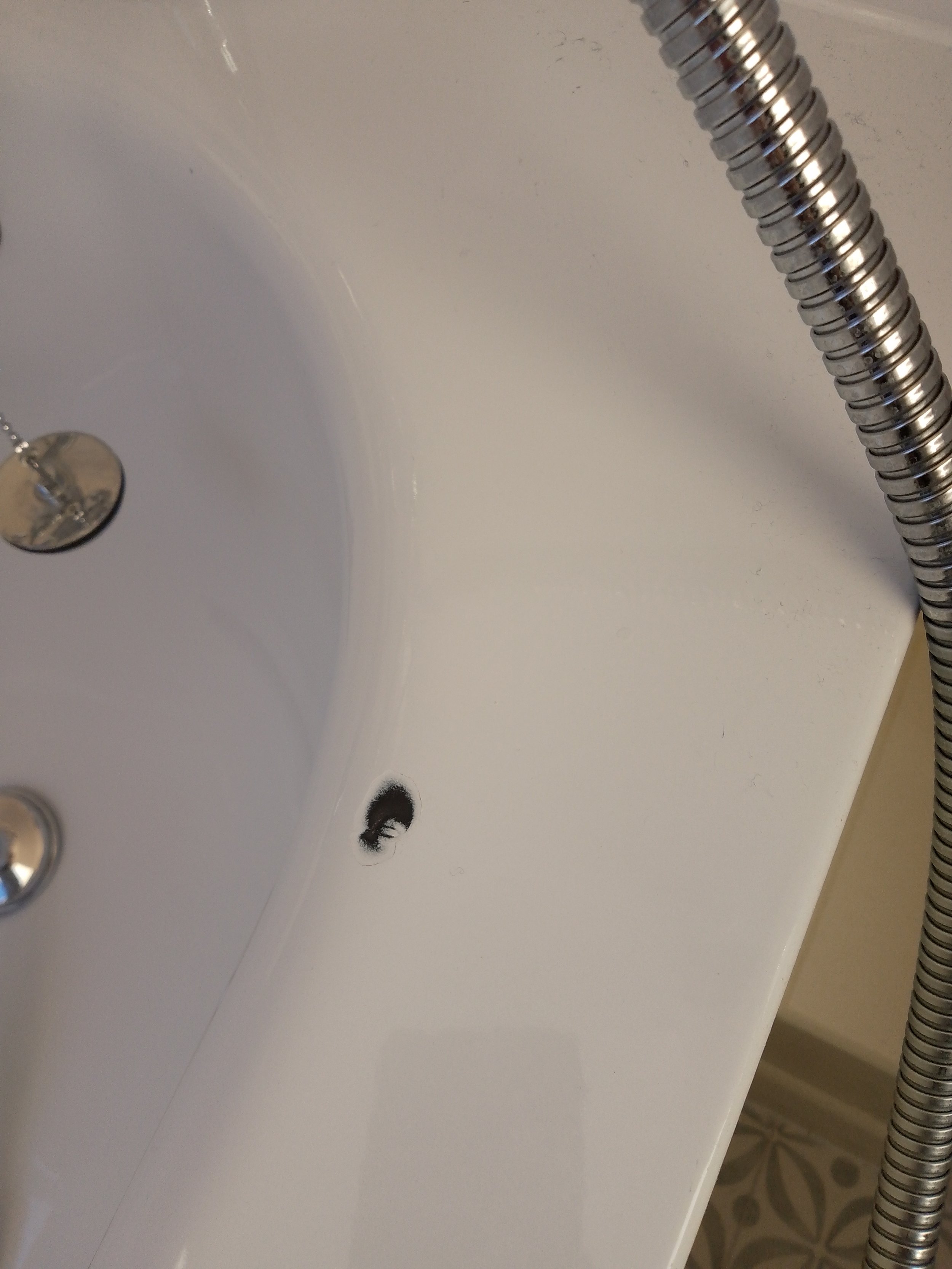
Baths can be damaged in several ways, regardless of whether they are made from acrylic, enamel, fibreglass, or cast iron. The most common problems include:
Chips and impact damage caused by dropped objects
Cracks or splits, often from movement or poor installation

The on-site bath repair process
We use specialist materials and equipment specifically for bath repairs. The process typically involves the following steps:
1. Damage assessment
We inspect the bath to identify the extent of the damage and confirm that it is suitable for repair. Most cosmetic and structural surface damage can be fixed without removing the bath.
2. Surface preparation
The damaged area is thoroughly cleaned and dried. Any loose material is removed, and the surface is carefully keyed (lightly abraded) to ensure strong adhesion of repair compounds.
3. Filling and reshaping
For chips or cracks, a high-grade filler or resin is applied to rebuild the damaged area. The repair is shaped and smoothed to match the original contours of the bath.
4. Colour matching
A key advantage of professional repairs is precise colour matching. We mix specialist paint to match the bath’s original colour and finish, ensuring the repair blends seamlessly with the surrounding surface.
5. Applying the paint
The repaired area is paint sprayed with a durable topcoat. Once cured, the surface is polished to restore the bath’s original gloss and smoothness.